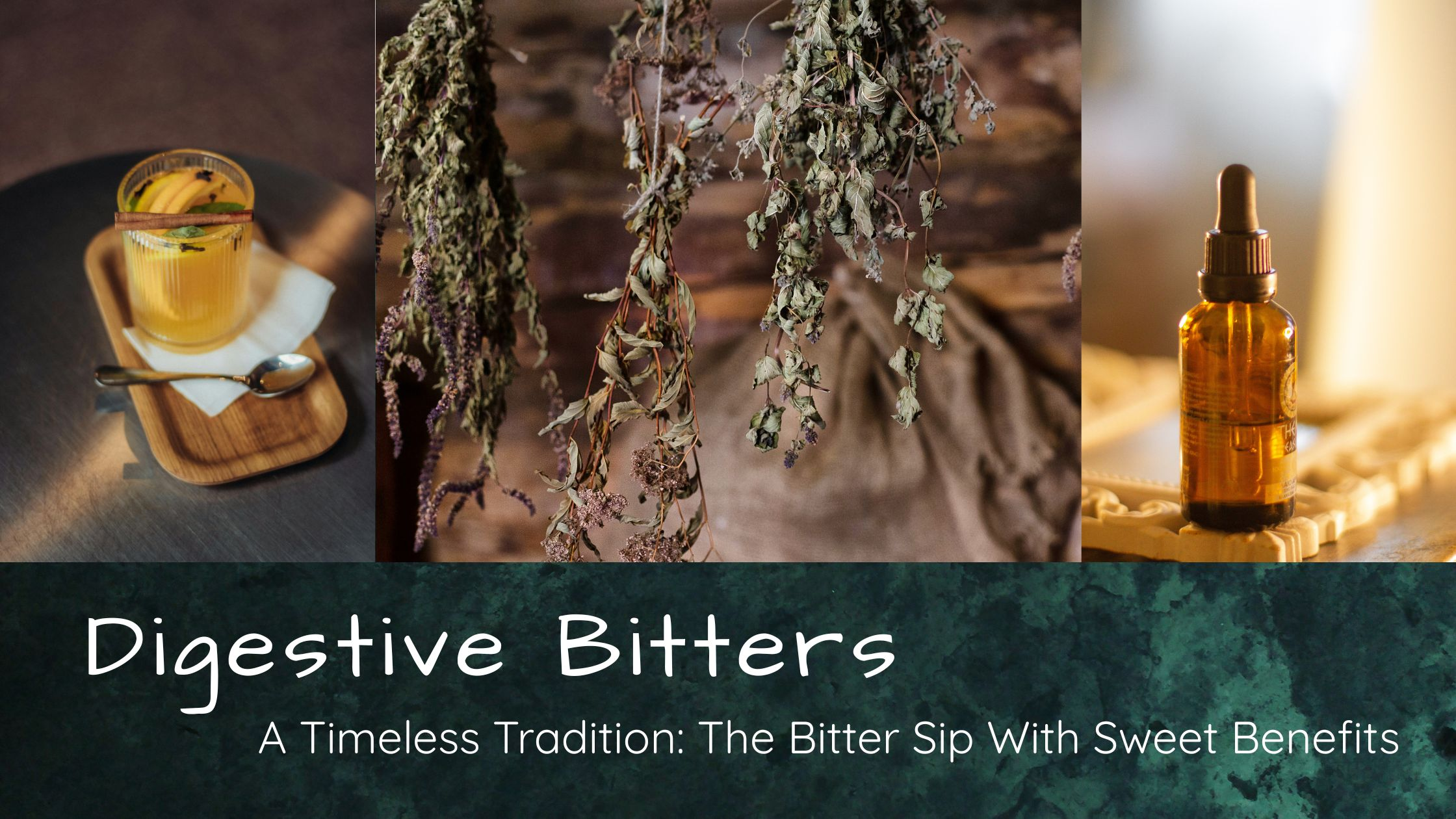
A Timeless Tradition: The Bitter Sip With Sweet Benefits
Long before the advent of multivitamins, super foods and fad diets, our ancestors used a simpler, earthier remedy for digestive health: bitters. Digestive Bitters are botanical extracts, specifically selected for their bitter taste and the complex reactions they signal within the body, stimulating and enhancing our digestive capacity at meal times.
Naturally bitter foods and herbs have been used for centuries around the world, incorporated into the daily diet in small amounts to bolster digestive capacity and balance flavour. However, with the advent of the processed food industry, our diets have changed drastically and our pallets have become unaccustomed and unappreciative of the bitter flavour.
We once ate a rich variety of locally grown and foraged foods and herbs, offering our pallets and our microbiomes a complex range of flavours and nutrients. Now, we forage the supermarket aisles for pre-packaged meals, processed meats, and fruit and vegetables that have been selectively bred to prolong shelf-life and maximize sweetness in order to satisfy our picky pallets.
Sadly, over recent years the bitter flavour has fallen out of favour; without an appreciation for the benefits which the bitter flavour brings us, our taste buds unwittingly choose the sweet & juicy over the bitter & dry. Today, however, digestive bitters are making a resurgence, not only for their health benefits but also for the cultural history they carry with every drop.
A Global Practice Rooted in Ancient Wisdom
The tradition of bitters is anything but new. From Ayurveda and Chinese Medicine in the east, to to traditional European herbalism in the west, bitter herbs have been honoured and utilized to cleanse the liver and stimulate digestion. Despite differing philosophies, many cultures independently recognized the same truth: bitters awaken the digestive system.
In our modern, globalized diets, the bitter flavour is rarely experienced. However, despite the dramatic change in our diets, the basic biology of our digestive systems has remained the same. Receptors of the bitter taste are found along our entire digestive system, from our mouth to our intestines. This suggests that their function is vastly more complex than simply identifying taste; bitter receptors form a vital part of an integrated communication network that kickstarts your digestive processes, regulates insulin release, and plays an important role in our innate immune functions.
The Physiology Behind the Bite
Bitterness isn’t just a flavor—it’s a signal. When bitter compounds hit the tongue, receptors send a message to the digestive organs: “Get to work!”
This natural signalling cascade can:
- increase saliva production
- stimulate stomach acid
- support bile flow
- ease bloating
- improve nutrient absorption
It’s the body’s elegant way of preparing itself for the meal ahead—something modern diets, often lacking in bitter flavours, don’t naturally trigger.
More Than Just Digestion
However, the message is not restricted to just digesting our food. Studies1 have shown that bitter foods contain important antioxidant, anti-inflammatory, antitumour, and anti-bacterial properties. They can also help to protect cells against the damage caused by free radicals, slowing down our cellular ageing processes and helping to prevent a host of chronic, degenerative diseases such as cancer, diabetes and cardiovascular disease.
These recent studies have found that bitter foods can significantly effect several key, health-protective mechanisms, such as:
- lowering blood sugar levels
- increasing serum insulin & improving insulin sensitivity
- lowering cholesterol
- anti-hypertensive (lower high blood pressure)
- inhibit inflammatory responses
- clear free radicals
- reduce oxidative stress
More Isn’t Always Better – A Little Goes A Long Way
To explain our dislike of the bitter taste, it has been interpreted it as an evolutionary adaption to help defend us against ingesting harmful and toxic substances. As many plants have evolved bitter, toxic chemicals to protect them against being eaten, this conclusion certainly has validity2:
Too much bitterness, in our diets or in our lives, is not good.
However, the story is no as simple as that, and modern nutrition is beginning to understand what traditional diets and herbalism has long known; that the right bitter flavours, in the right amount are a vital part of a healthy diet.
That being said, if you decide to include some Digestive Bitters in your daily routine, remember that a little can go a long way. Trust your body, and listen to the signals and feedback you receive. Although small amounts of the bitter flavour can bring benefit, long-term and/or excessive intake of bitter compounds can be overly cooling and detoxifying to the system, dampening our digestive fire and negatively impacting our health. This can be especially so in individuals who are already frail or weakened, or who tend toward coldness &/or dryness constitutionally.
As always when starting a new herbal remedy, take it slow and listen to the feedback of your body. If you have any underlying health concerns, always consult with a qualified practitioner before beginning.
From Apothecary to After-Dinner Ritual
By the 18th and 19th centuries, bitters had made their way into Western apothecaries and home medicine cabinets. They were considered a cure-all for sluggish digestion, hangovers, and general malaise. Eventually, bitters crossed over into culinary culture:
- Amaro became a beloved Italian digestif.
- Angostura and Peychaud’s shaped cocktail history.
- Scandinavian countries embraced herb-forward schnapps as traditional after-dinner sips.
Even today, many families continue the ritual of having a small bitter drink after a heavy meal—a comforting nod to old-world wisdom.
Not All Food Is Created Equal: Cultivated v Wild Nutrition
We are frequently told of the importance of including fruits and vegetables in our daily meals. This is because fruits and vegetables are a rich source of nutritional compounds such as phenols and polyphenols, flavonoids, isoflavones, terpenes, and glucosinolates, amongst others. However, many of these bioactive compounds are bitter, and unpalatable to the modern consumer.
As a result, the food industry routinely removes these compounds from plant foods through selective breeding and gene-editing6. The decreased nutritional profile of cultivated foods as compared to their wild ancestors or cousins is widely recognized3,4,5. When we consider the complex and vital role which the bitter flavour plays in our basic digestion and overall health, it begs us to ask what the possible link may be between the reduction in bitter flavours and the rise in digestive, metabolic and degenerative diseases over the modern era.
A Wellness Revival: Bitters in the Modern Era
In recent years, digestive bitters have returned to the spotlight. Herbalists and naturopaths praise them for supporting gut health, while foodies enjoy their ability to add depth to dishes and brews, to cocktails and mocktails. Given that the bitter flavour is sorely missing from our everyday diets nowadays, the benefits of adding in a little bitter ritual to our meals times may be just what is needed.
Today, bitters come in a variety of shapes and forms:
- tincture bottles
- artisanal cocktail bars
- herbal elixirs
- mocktails and tonics
People are drawn to them not just for digestion, but for a sense of ritual—something grounding, unique and intentional in a fast-paced, overly homogenized world.
How to Use Bitters in Daily Life
If you’re curious about trying them, here are simple ways to integrate bitters into your routine:
- Add a tsp of Digestive Bitters to a small glass of water before meals
- Take a few drops directly on the tongue for a more immediate effect
- Mix a bitter tonic into cocktails or mocktails for an aromatic twist
- Enjoy an amaro or herbal digestif after a big dinner
A Tradition Worth Reviving
Digestive bitters connect us to centuries of culinary and healing traditions. They remind us that wellness doesn’t always come in complicated forms—sometimes it’s as simple as a bitter sip before dinner.
In a world full of sweet, salty, and overly processed foods, perhaps embracing the bitter is exactly what our bodies—and our traditions—need.
References
- Qiao K, Zhao M, Huang Y, Liang L, Zhang Y. Bitter Perception and Effects of Foods Rich in Bitter Compounds on Human Health: A Comprehensive Review. Foods. 2024 Nov 22;13(23):3747.
- Stephen P Wooding, Vicente A Ramirez, Maik Behrens, Bitter taste receptors: Genes, evolution and health. Evolution, Medicine, and Public Health, Volume 9, Issue 1, 2021, Pages 431–447.
- Shishparenok, A., et al. (2025). The Biologically Active Compounds in Fruits of Cultivated Varieties and Wild Species of Apples. Molecules, (19):3978. October 2025.
- Chamorro, M.F., Mazzoni, A., Lescano, M. et al. Wild vs. cultivated strawberries: differential fruit quality traits and antioxidant properties in Fragaria chiloensis and Fragaria × ananassa. Discover Food 5, 71 (2025).
- Hebelstrup, Kim Henrik. (2017). Differences in nutritional quality between wild and domesticated forms of barley and emmer wheat. Plant Science, Volume 256, March 2017.
- Davids Landau, M. (2024). Bitter vegetables have health benefits. What happens if scientists make them tastier? National Geographic, November 25, 2024.